

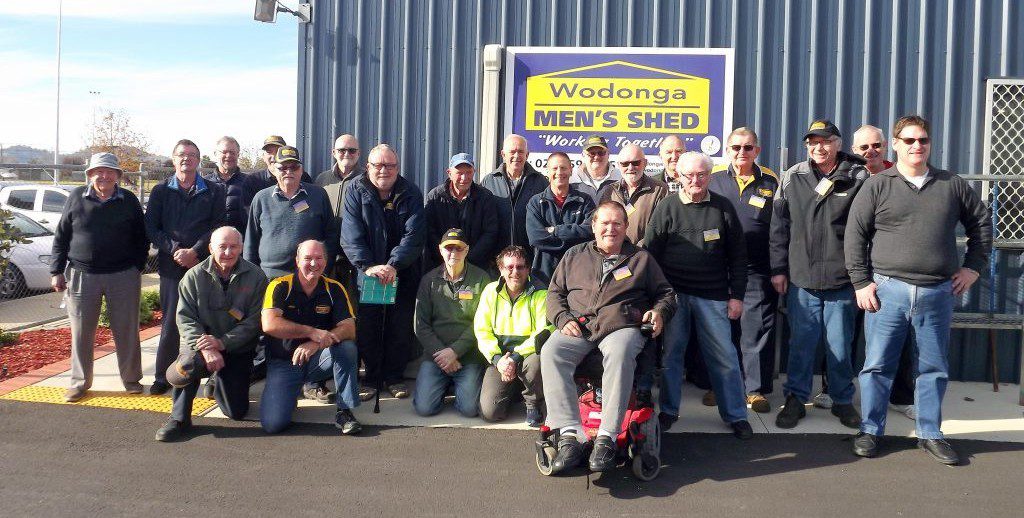
How Wodonga Men’s Shed is strengthening wellbeing across their region
When people think about wellbeing in a Men’s Shed, they often picture the simple things…
A cuppa around the morning tea table. Someone noticing a mate hasn’t been around for a while. A quiet conversation in the corner of the workshop. A guest speaker dropping in to talk about health. Those moments are important, but sometimes wellbeing starts with a different question altogether: What could we achieve if we worked together?
That’s the question Wodonga Men’s Shed has been answering through its leadership of the Murray Hume Men’s Shed Cluster, helping bring together 28 Men’s Sheds across southern New South Wales and north-east Victoria to improve men’s health and wellbeing.
More than looking after your own members
Like many Men’s Sheds, Wodonga has always recognised that wellbeing is part of everyday shed life. But over recent years, the shed has also taken on another role – helping connect sheds, health organisations and community partners to deliver health initiatives that no single shed could easily coordinate alone.
Instead of each shed approaching health providers separately, Wodonga has acted as the organiser, bringing together funding, partnerships, venues, promotion and logistics so that sheds across the region could participate. It’s a simple idea, but one that has had a significant impact.
Building momentum through partnerships
One of the Cluster’s first major initiatives focused on dementia awareness.
Working with Dementia Australia and supported through AMSA’s National Shed Development Program, information sessions were delivered across five regional locations, attracting more than 600 attendees from 23 Men’s Sheds. Local businesses and community organisations also stepped in to provide venues, catering and promotional support, allowing available funding to stretch even further.
Rather than ending there, Wodonga and its partners looked at how they could build on that momentum.
The remaining funding helped launch the Shane Warne Legacy Health Check Program in partnership with Priceline Pharmacy, delivering more than 300 heart health assessments across 13 locations and creating another opportunity for men to engage with their health in a familiar, trusted environment.
Today, the work continues through regular sessions on topics including diabetes, melanoma, continence, prostate health and cancer awareness, while relationships with local health providers continue to grow.
Leadership that helps others succeed
What stands out most about Wodonga’s story isn’t simply the number of events or participants. It’s the way the shed has made it easier for other sheds to get involved.
By taking responsibility for grant applications, financial management, event coordination and promotion, Wodonga has helped remove the administrative burden that often prevents smaller volunteer-run sheds from delivering health initiatives.
That’s leadership in its simplest form… not doing everything yourself, but creating opportunities for others.
It’s also a reminder that some of the strongest wellbeing outcomes come through collaboration. When sheds work together, they can attract larger partners, reach more men and build relationships that continue well beyond a single event.
What can other sheds learn?
Not every shed has the capacity to coordinate a regional network, and that’s okay. The lesson from Wodonga isn’t that every shed should run large-scale health programs. It’s that wellbeing grows when people work together.
That might mean partnering with a neighbouring shed to host a guest speaker, inviting a local health service to morning tea, or reaching out to community organisations looking to connect with men in a trusted environment.
Sometimes the biggest step is simply asking, “Who could we do this with?”
And, you can always reach out to us for help!
Looking beyond the shed fence
At AMSA, we often talk about Men’s Sheds as places where men connect, contribute and support one another. Wodonga Men’s Shed reminds us that those connections don’t have to stop at the front gate.
By helping build partnerships, sharing resources and supporting neighbouring sheds, they’ve demonstrated that one shed’s leadership can strengthen the wellbeing of an entire region. Because when sheds work together, everyone benefits.
Could this work in your region?
You don’t need to start with a major health program. Sometimes the biggest impact starts with one conversation.
Consider:
- Partnering with another nearby shed.
- Inviting a local health service to speak.
- Sharing grant opportunities and resources across your region.
- Asking your local Primary Health Network or council how they can support men’s health through your shed.