

From two men 5 years ago to 23 today, every Wednesday from 9am to 2pm the Dingley Village Mens’ Shed (DVMS) music group meet, play, discuss, learn and have fun. From the beginner to the more experienced players and composers too. They have also begun making and repairing instruments.
The process of “jamming” (playing and singing together) is both rewarding and fun and has helped us become better musicians. When we “jam” something magical happens not just for the individuals and the group but for those who come just to listen. It’s not just Jamming we now have about 20 songs that we do pretty well, 60’s and 70’s of course.
Last year they were fortunate to get a community grant of $2000 to help us purchase some essential audio equipment that now enables them to sound better and record performances.
Peter O’Leary from the shed said “In putting the grant application together I wasn’t aware of the cognitive benefits of learning and playing an instrument particularly at an older age. Like those of us at DVMS there must be plenty of Sheder’s out there that once played an instrument or even still do who would benefit from a musical experience. I hadn’t played much at all for the last 40 years and when arthritis started to take hold of my hands I just didn’t bother at all. After picking up a guitar again and forcing my twisted hands through much pain I have greater movement in my fingers and less arthritic pain. As to the cognitive benefits ( some may argue ) but I feel I have a lot more energy, using my brain a lot more ( I can now read and play Tablatures) and I have a more positive outlook. It’s a bit like the old saying “Use it or lose it”. It’s just great to get together with like minded men and belt out a tune or two.
Listen to Peter O’Leary talk to John Paul Young in this episode of the Shed Wireless Podcast
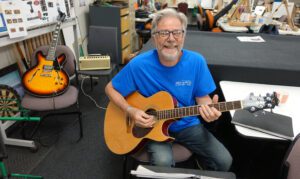
Getting smarter with music
Psychologists have found out some cool things about how learning music helps your brain:
- You get better at combining information from your senses like seeing, hearing, and touching.
- Learning music makes your brain structure better, especially if you start learning early in life.
- Your brain connections become stronger and spread out more.
- You don’t have to rely on your short-term memory as much when you’ve been learning music.
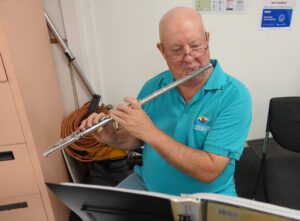
Improved language functioning
In one study, researchers found that musical training may help with language processing and help to prevent, slow down or delay loss of language skills as one ages.
Older adults, aged 60-85, who never played music before, got better at talking and thinking after taking piano lessons for a few months. The lessons also made their brains work faster and better overall. The researchers found that older folks can learn music theory stuff like scales and intervals pretty easily.
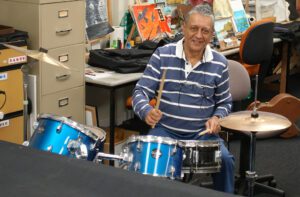
Improved hearing
Other researchers found that “musical training can, to some extent, counteract age-related auditory declines even when it has been discontinued for several decades.”
Improved memory
Research has found that playing a musical instrument can increase memory. It also makes the parts of the brain involved in storing information more active. The study even found that the results lasted well after music lessons ceased.

Other benefits
Other benefits of learning an instrument are less studied as of yet, though experts still cite them and anecdotal evidence of their validity abounds.
These include:
- Less stress
- More social engagement
- Enhanced self-confidence
- Mood boost
- Increased patience and perseverance
- Strengthened Immune system
- Increased creativity
- Greater perspective on history and culture
- Developed musical appreciation
Read more about The Benefits of Learning to Play an Instrument: What Studies Show – Ingleside (inglesideonline.org).